
One definition of beautiful is ‘pleasing the senses, possessing qualities that give great pleasure or satisfaction to see, hear, smell, or think about’. Lovely. Gorgeous. Charming. Stunning. Striking. Superb.
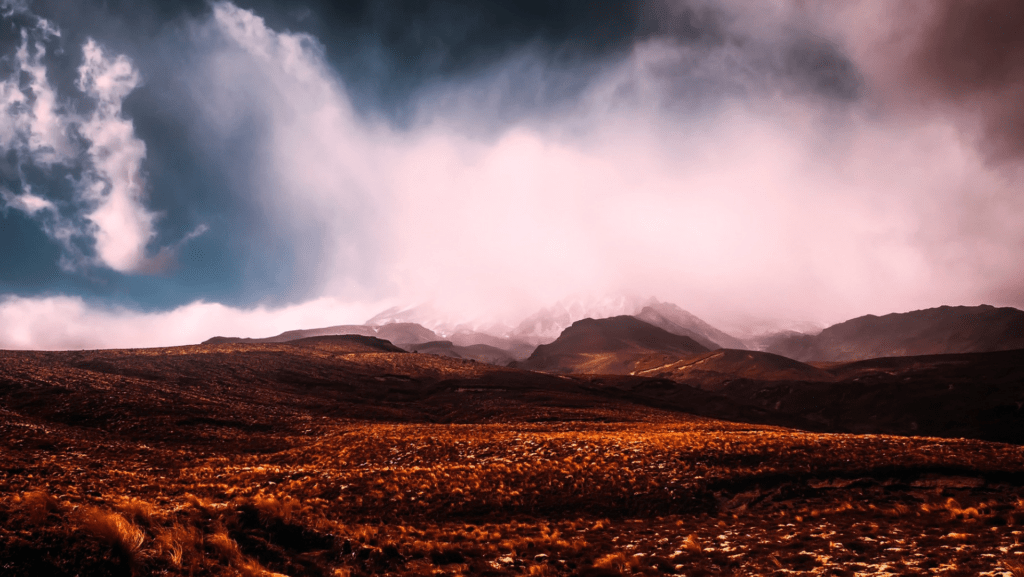
I could use all those adjectives to describe my most recent journey to New Zealand. The country has been named the most beautiful country in the world. It’s no wonder, and I hope it remains that way with its relatively low population and young, dramatic geology. Snow-capped mountains, sweeping beaches, volcanic peaks, lush native forests, glassy lakes, and fjords. Clean. Safe. Peaceful.
As I write this, I also know we are living in challenging times. Experts say humanity is in a severe, unprecedented imbalance with the natural world, operating far beyond Earth’s ecological capacity and crossing 7 out of 9 planetary boundaries (limits within which humanity can thrive)—climate change, biodiversity loss, land-use change, freshwater use, novel entities like plastic, biogeochemical flows (systems that recycle nutrients), and ocean acidification (the decrease of the PH balance of the Earth’s oceans). It’s hard for me to be a witness to such a decline in the natural wonders of our beautiful planet.
I also know forests devastated by wildfire eventually grow back, and corals, though fragile, have been recovering through larval recruitment. I was alive when, in 1986, a nuclear reactor exploded during a safety test at the Chernobyl nuclear plant in Ukraine, releasing massive radiation across Europe. At the time, it was predicted that no life would flourish in the Chernobyl Exclusion Zone for 900 years. However, today the Zone (currently uninhabitable for humans) has become a thriving, unexpected wildlife refuge. Animals such as bears and lynx, absent for decades, have returned. It is remarkable.
Life in the wild relies on one another – bees pollinating flowers to get nectar, birds sitting on the backs of animals to eat ticks and parasites, trees providing shelter and oxygen for animals who, in turn, decompose, nourishing the soil to help plants thrive.
We also rely on one another, and with all life on earth. We need air, food, and water. We are vulnerable to environmental changes such as drought and storms. And although we are a dominant force altering natural cycles, we still function within the Earth’s ecosystem. We are part of nature, or maybe even Nature itself. When I stand in a grove of old-growth forest or on a mountain top and gaze out at the beautiful, natural world, I’m simply recognizing my own true nature. The hard-wired need to reconnect to this truth.
Nature doesn’t rush. Growth takes time—like nurturing a plant. So much development happens beneath the surface, invisible until it becomes visible.
My time in New Zealand rekindled that trust. Not just in beauty, but in process. In cycles. In the quiet, persistent intelligence of the natural world that continues despite disruption, despite us.
And maybe that’s the invitation. Not to just admire nature, but to remember our place in it. To move with a little more awareness, a little more restraint, a little more patience. Because while the Earth can recover, it does so on its own timeline—not ours.
Still, I find hope there: in forests that return, in wildlife that claims abandoned land, and in the steady, unfolding of life itself. It reminds me that there is order to things—one I’m not separate from, even when I forget.
“Adopt the pace of Nature. Her secret is patience.” Ralph Waldo Emerson
Enjoy the Passage of Time.
Sharon
© 2026. Sharon Kreider. All Rights Reserved.
One thought on “The Natural Order of Beautiful Things”
One of your best!
Comments are closed.