
I didn’t expect a mountain to teach me about kindness when we journeyed into Japan’s mountains and went on a pilgrimage. Each day meant climbing up 2500’(762m) and descending just as far. Not just once, but several times a day. I knew ahead of time that on one of those days, I would need to trek twenty miles (32km) to reach my destination. I told myself it would be tough, but hey, I’d done a lot of hiking in my life, I’d known hardship. I could do this.
On the twenty-mile day, my daughter and I got an early start, only stopping for mini breaks, eating a handful of peanuts or half sandwiches, and water. The mountain air carried the scent of cedar and something older. One time, after a grueling descent, we paused at a slow-moving river and soaked our aching feet. After five minutes, we once again put on our packs and started the next ascent, and finally made it to mile eighteen, where it was possible to take a bus to our endpoint rather than hike the two miles up and over yet another pass. The bus picked up hikers like us or pilgrims three times a day. The last bus going to our destination left at 4:30 p.m. We arrived at the village at 4:45 p.m.
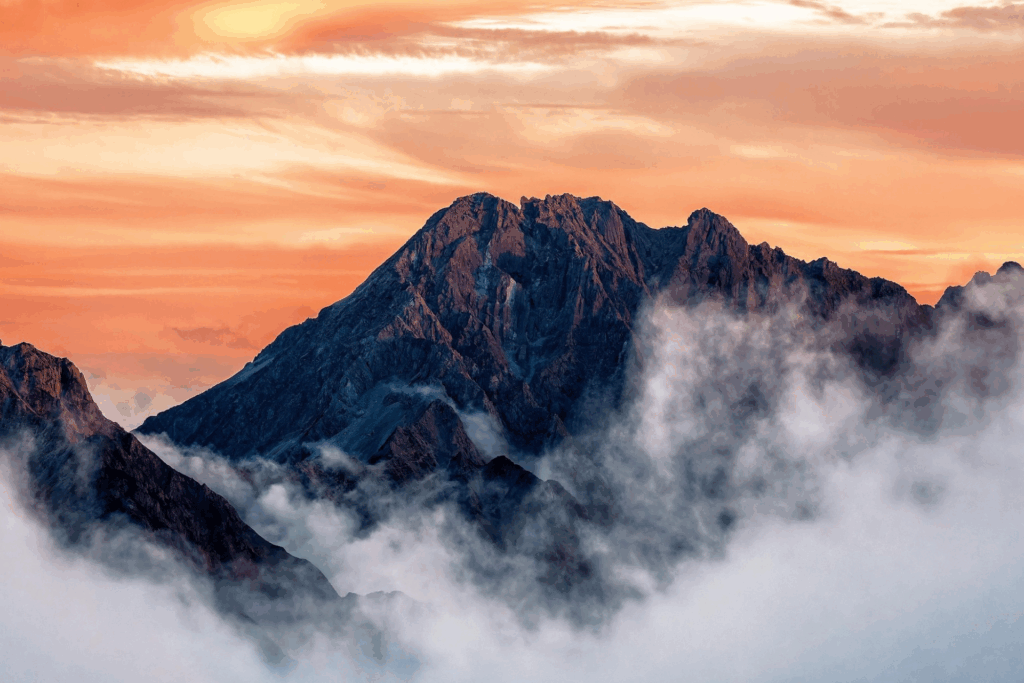
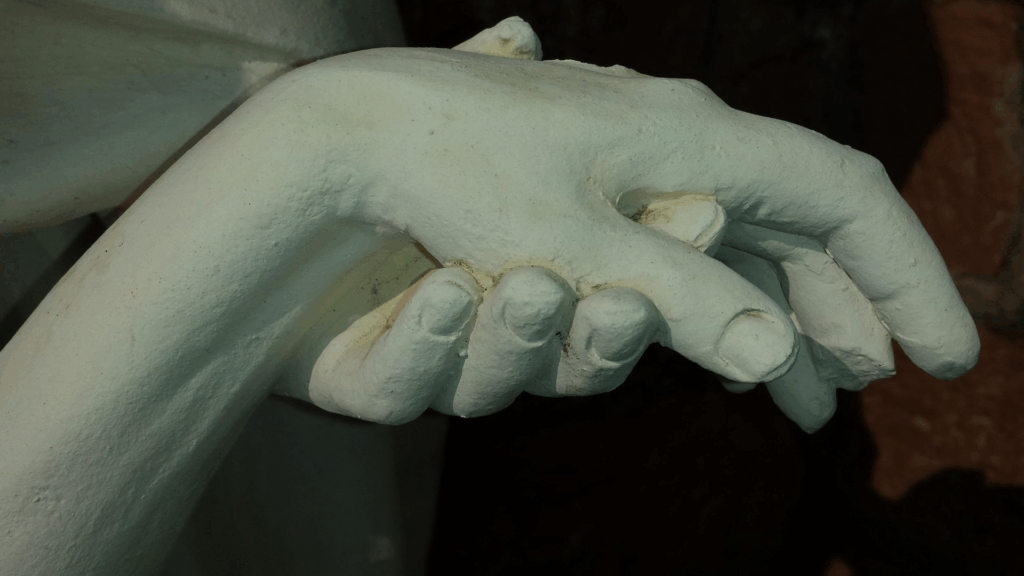
We had no choice but to hike up and over. It took fifteen minutes to walk through the village to the trail. The sun had set behind the ridge, and by our calculations, it would begin to get dark around 5:30 p.m. and likely pitch black by 6:00 p.m. We started up the steep slope. It was arduous, probably because we were exhausted. I sweated like I was in a sauna. On the way up, the touch of my daughter’s hand steadied me.
She lit the way with the flashlight on her phone. By the time we got to the top, it was indeed very dark. When I bent down to retie my shoelace, the earth smelled damp, and I couldn’t see a light anywhere. Having never been there before, we didn’t even know where we were going. The laborious descent over boulders, rocks, and ledges tapped into our deepest reserves. I counted my breaths. I stayed present. I remained strong for my daughter, who was also experiencing the same thing as I was. Were there dangerous animals or snakes in Japan? I tried not to think about that.
At last, we reached a road with two thatched homes on either side. One had their porch light on. My daughter looked at her phone to see if she had reception. She did. She checked our location in relation to the ryokan we had booked for the evening. The GPS stated we were still 20 minutes away. Were we on the right road? Should we keep going?
The night pressed in, the forest breathing beside us. My daughter’s voice trembled. “I don’t know, I don’t know.”
My heart thudded with the same rhythm. I realized my certainty was wearing thin. And then –footsteps. An elderly Japanese man came up the road.
“Sumimasen! Sumimasen!” I exclaimed. Excuse me! Excuse me!
The man approached us. I shone my headlamp on the voucher for our accommodation, which was written in Japanese.
He read it. “Ah, ah, ah.” He said. “Hai.” He pointed down the road.
We were going in the right direction! “Arigatou Gozaimasu!” Thank you! It no longer mattered that we were dog-tired; we were going to be okay!
We mimed to the man that we had come down the pass in the dark. He lifted his eyebrows, his eyes big and round. He said a few words in Japanese that I didn’t quite understand, but the next thing I knew, he was escorting us down the road, showing us the way, pointing ahead. When we got to where the road met a larger road, he bowed, turned around, and headed back up the road.
“Arigatou Gozaimasu!” I called after him. I wanted it to mean so much more than thank you.
When we finally arrived at our ryokan, it was clear the owners had worried about us. They hastened to register us and showed us our room. We bathed and put on our kimonos for the dinner they’d saved for us. It was more like a feast, but we could hardly eat anything. We were simply too spent to eat.
For over 1000 years, pilgrimages in Japan have been sacred sites for healing and salvation. Monks walked them for spiritual enlightenment. In fact, some of the pilgrimages are difficult by design, to keep seekers awake to the present moment. The mind doesn’t tend to wander or get lost in thought when you have a 1500’(457m) drop off in front of you.
I can tell you I rarely thought about anything else except placing one foot in front of the other, aware of what was around me, watching my breath, and every so often, in complete wonder. My vocabulary seems utterly inadequate to describe my experience. It left me with a quiet confidence in life itself. A peace that still lingers.
That old man’s kindness cut through me like a clean wind through the trees—simple, pure, unforgettable. His kindness wasn’t grand or showy; it was simple, human, and enough to change everything. It made me realize how small gestures ripple outward, far beyond the moment. We may never know when our own quiet kindness becomes someone else’s lifeline—but it always matters. In the end, isn’t that the real pilgrimage? Maybe the world isn’t as divided as it seems. Maybe, we’re all just walking each other home.
“Kindness is the language which the deaf can hear, and the blind can see.” Mark Twain
Enjoy the Passage of Time.
Sharon
© 2025. Sharon Kreider. All Rights Reserved.
4 thoughts on “A Pilgrim’s Lesson in the Mountains of Japan”
So inspiring to follow your words and the emotions they relay .. What an amazing journey you and Natalie had . Thank you for sharing and allowing us into your world .. Imagine .. Tim
Great story and memory
Thank you!
Loved this one!
Comments are closed.